Blog

  • 🇨🇦 Canada’s “Free” Healthcare — Or a System You Pay for in Time?

    🇨🇦 Canada’s “Free” Healthcare — Or a System You Pay for in Time?


    When even healthcare workers don’t wait in the system they work in — what does that tell us?

    In Canada, some doctors and medical professionals are quietly choosing to seek care outside the country.

    Not because they don’t believe in healthcare.

    But because they understand the system better than anyone.

    They know the wait times.

    They know the delays.

    They know how long “non-urgent” can actually mean.

    So instead of waiting months — sometimes a year — for diagnostics or specialist care, they choose speed.

    They choose certainty.

    And that raises a serious question:

    If the people inside the system don’t fully rely on it for timely care…

    what does that mean for everyone else?


    1️⃣ “Free” — But You Pay in Time

    Canada’s healthcare system is not truly free.

    We pay through taxes.

    And when care is delayed, we pay in:

    • Time
    • Pain
    • Anxiety
    • Lost productivity

    In places like British Columbia, delays are becoming part of the experience.


    2️⃣ Long Waitlists = Real Risk

    A delayed MRI isn’t just an inconvenience.

    It means:

    • Living with pain without answers
    • Delayed diagnosis
    • Constant uncertainty

    Allergy specialists can take months to a year.

    For someone dealing with unknown reactions, that delay can be dangerous.


    3️⃣ ICBC Patients: Injured, Then Ignored

    If you’re injured in a car accident in British Columbia, your care often involves Insurance Corporation of British Columbia.

    But many clinics hesitate to take these cases due to:

    • Extra paperwork
    • Reporting requirements
    • Administrative burden

    So patients hear:

    We don’t take ICBC cases.”

    💡 A Simple Fix Worth Asking

    Why not allow patients to:

    • Pay upfront
    • Submit to ICBC
    • Get reimbursed

    Just like auto repairs.

    This could remove delays and improve access.


    4️⃣ Walk-In Clinics That Aren’t Really Walk-In

    Companies like WELL Health advertise walk-in clinics.

    But reality:

    • No walk-ins accepted
    • Fully booked for days
    • Appointment-only systems

    So what does “walk-in” really mean anymore?


    5️⃣ Family Doctors: Harder Than Finding Gold

    In Canada, getting a family doctor can take years.

    Even when you have one:

    • Visits feel rushed
    • Access is limited

    Primary care is becoming unreliable.


    6️⃣ Qualified Doctors Who Can’t Practice

    Internationally trained doctors are working outside healthcare.

    They face:

    • Complex licensing
    • Limited residency spots
    • Long delays

    While patients wait and the system struggles.


    7️⃣ Dental Care: The Expensive Gap

    Dental care is costly enough that Canadians travel to:

    Because it’s cheaper overall.

    Pricing structures influenced by groups like the Canadian Dental Association, combined with insurance dynamics, can contribute to rising costs.


    8️⃣ Paying for a Sick Note in a “Free” System

    Doctor visit: covered.

    Medical note: $20–$50.

    Even when sick, you pay.


    9️⃣ Even Healthcare Workers Are Opting Out

    Some healthcare professionals choose to seek care outside Canada.

    Because they know the delays.

    Because they want faster answers.

    This reflects a larger trend:

    People choosing speed and certainty over waiting.


    🔟 Staying Healthy Isn’t Cheap Either

    Here’s something rarely acknowledged.

    Choosing to stay healthy in Canada isn’t cheap.

    You’re already paying into the public healthcare system through taxes — meaning less take-home income.

    Then on top of that, if you try to stay healthy:

    • Gym memberships
    • Supplements
    • Higher-quality groceries
    • Fresh food choices

    That can easily cost an additional $100–$300+ per month per person.

    So what happens?

    👉 Healthy individuals spend extra to avoid using the system

    👉 While still paying into it through taxes

    At the same time, they also share the financial burden of a system under pressure from preventable health issues.

    A Fair Question

    Should the system do more to:

    • Encourage preventive health?
    • Reward healthier lifestyles?
    • Reduce long-term strain instead of reacting late?

    Because right now, staying healthy feels like a personal expense, not a supported priority.


    The Bigger Picture

    This isn’t one issue.

    It’s a combination:


    Final Thought

    This isn’t about blaming doctors.

    It’s not about rejecting public healthcare.

    It’s about recognizing a gap between:

    👉 What the system promises

    👉 And what people actually experience

    Because when someone is sick, injured, or trying to stay healthy —they shouldn’t have to fight the system at every step.


  • 🚑  Getting Medical Help After an Accident Shouldn’t Be This Hard

    🚑 Getting Medical Help After an Accident Shouldn’t Be This Hard

    You get into a road accident. You’re in pain. Maybe your neck hurts. Your back feels tight. You might even be dealing with headaches or dizziness after the whiplash.

    Naturally, the first thing you think is: “I need to see a doctor.” But in British Columbia, that’s not always easy.

    Many people are now facing a frustrating reality — clinics often hesitate or refuse to take patients with ICBC-related injuries.

    Why? – Because dealing with these cases means extra paperwork, reports, and back-and-forth with the Insurance Corporation of British Columbia. For clinics, it’s more time, more admin work, and not always worth it.

    And while that might make sense from their side…What about the patient?


    The Reality for Everyday People

    Instead of getting treated, people are:

    • Calling clinic after clinic
    • Being turned away
    • Waiting longer while in pain

    In some cases, even their own family doctor may hesitate because of the added complexity tied to accident claims.

    Think about that for a second.

    You’re injured… and now you have to convince someone to treat you.


    💭 What Kind of System Is This?

    A system that is supposed to protect drivers should not make it harder to access basic medical care.

    This is where people start asking real questions:

    • Why does getting treatment feel like a struggle?
    • Why are injured individuals dealing with paperwork before recovery?
    • Why is the burden shifting onto the patient?

    🔥 The Bigger Picture

    This isn’t just about inconvenience.

    This is about:

    • Delayed treatment
    • Slower recovery
    • Added stress during an already difficult time

    When people hesitate to seek care — or can’t find it easily — the system is not working the way it should.


    ⚠️ When “Sick Leave” Feels Like a Punishment

    Adding to the frustration, injured employees face another hurdle: using their legal sick leave.

    In British Columbia, you’re entitled to five paid sick days per year. That’s the law. But in practice? Even with full documentation — ICBC claim reports, physiotherapy appointments, and proof of injuries — some employers act as if you’re trying to game the system.

    Instead of support, you get emails asking for more “proof” at your most vulnerable moment. They lean on policy, bureaucracy, and fear, not common sense or human decency.

    Meanwhile, the law is clear: you cannot be terminated for legitimately using your sick days. Yet employees often feel pressured, questioned, and stressed — all while trying to heal.

    Sick leave is not a privilege. It’s a basic right. And when the system forces injured employees to jump through hoops instead of providing support, it’s no wonder Canadians are fed up.


    Final Thought

    Whether it’s finding a doctor after a road accident or using your legal sick leave, the system that’s supposed to protect us too often feels like an obstacle instead of a safety net.

    When people start worrying about paperwork before treatment — something is broken!!!

  • ICBC Part 2: Licensing, Accountability & Public Trust

    ICBC Part 2: Licensing, Accountability & Public Trust

    We’ve all heard someone say it

    “Who gave you a license?”

    It’s often said jokingly after witnessing reckless driving.

    But underneath that joke is a real concern.


    Licensing Standards & Public Confidence

    Licensing is the foundation of road safety.

    When drivers appear unprepared, unfamiliar with traffic laws, or poorly trained, public confidence drops.

    People begin questioning the system that approved them.

    This isn’t about where someone comes from.

    It’s about consistency.

    If long-term residents must complete multiple road tests and strict graduated licensing — while others appear to face different pathways — families naturally ask whether standards are equal for everyone.

    Consistency builds trust.

    Inconsistency erodes it.


    Moving Within Canada Shouldn’t Feel Like Starting Over

    Drivers relocating to BC from other provinces sometimes face delays, paperwork hurdles, and additional testing — even commercial road test requirements in some cases.

    These are Canadian citizens, legally free to move and work anywhere in the country.

    Yet the process can take months.

    When bureaucracy becomes a barrier, families feel punished for mobility.


    The Right to Challenge Decisions

    Under BC’s no-fault system, access to court has been significantly limited.

    Fewer legal challenges.

    Less courtroom oversight.

    Reduced opportunities to dispute decisions.

    For families paying into the system, that can feel like losing a voice.

    Whether the system saves money or increases efficiency, public trust depends on one thing:

    Accountability.

    When accountability feels reduced, confidence weakens.


    The Trust Gap

    Road safety.

    Licensing fairness.

    Legal recourse.

    Equal standards.

    These are not small issues. They form the foundation of public confidence in the system.

    When that confidence erodes, people don’t just question policies. They question fairness itself.

  • ICBC: When Sharing Costs Families More

    ICBC: When Sharing Costs Families More

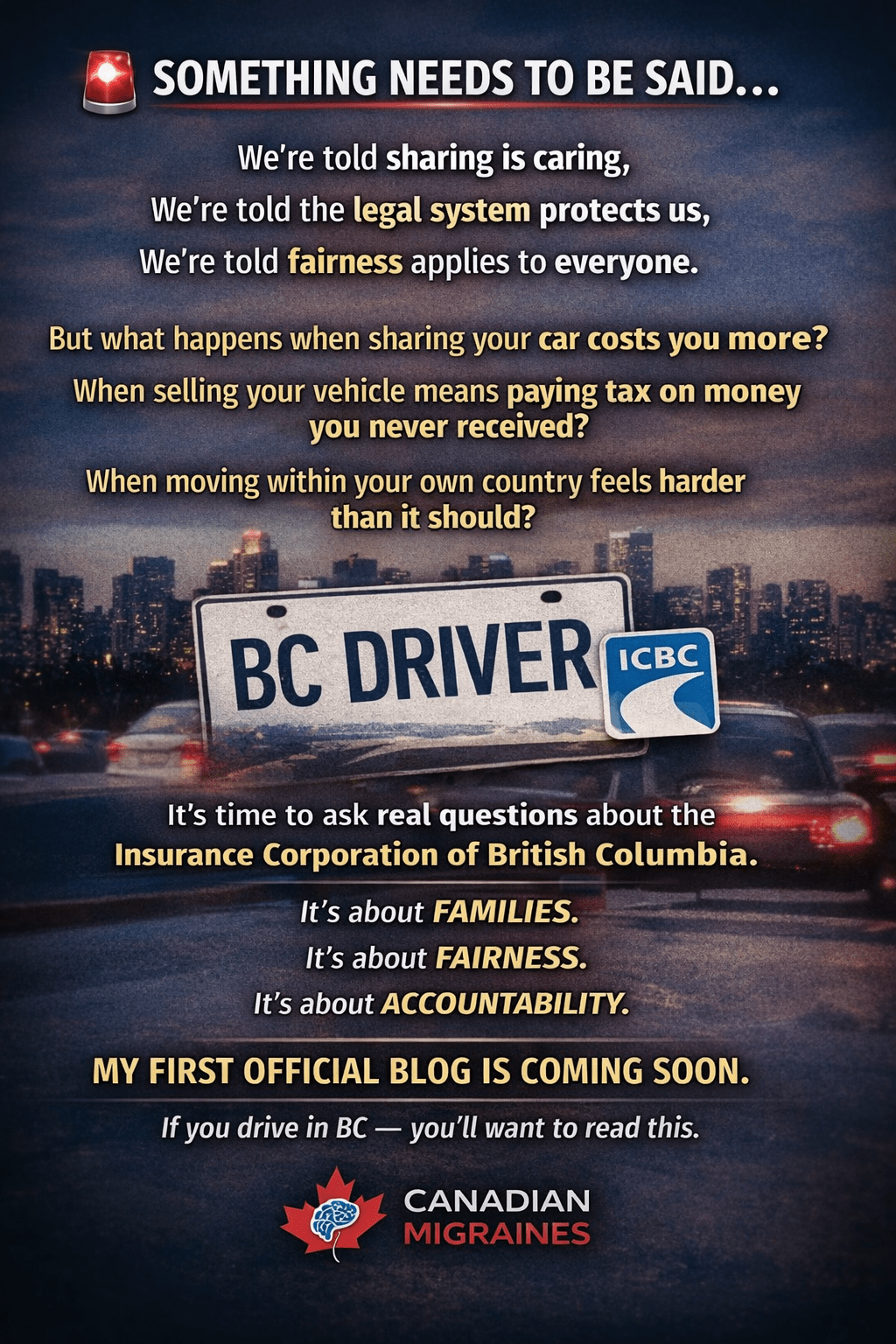
    We’re told sharing is caring

    We’re told family comes first. But when it comes to car insurance in BC, sharing can cost you more. For many families, the system managed by the Insurance Corporation of British Columbia doesn’t feel like protection — it feels like pressure.


    Paying Premiums… But Who Benefits?

    Families work hard to afford monthly insurance payments. For many households, car insurance is not optional — it’s required to get to work, school, medical appointments, and daily responsibilities.

    Yet the frustration is growing.

    Drivers often feel the only people satisfied with the system are those employed by it. When customers feel financially strained but the institution appears secure, trust begins to weaken.

    If drivers fund the system, shouldn’t they feel supported by it?


    Strict With Drivers, Generous Elsewhere?

    When filing a claim or requesting reimbursement, drivers describe rigid processes, heavy scrutiny, and little flexibility.

    At the same time, approved repair shops and accredited mechanics operate within structured agreements that seem far less restrictive.

    To everyday families, this creates the perception of imbalance:

    Individuals are questioned.

    Institutions are protected.

    Even if that perception isn’t always accurate, it matters — because trust matters.


    Sharing Comes at a Price

    Families have always shared vehicles.

    Parents lend cars to teens for work.

    Siblings help each other commute.

    Spouses rotate vehicles to save fuel.

    Sharing reduces expenses.

    It can even reduce carbon emissions.

    Yet adding a household driver often increases premiums.

    Fail to list someone? A claim could be denied.

    We’re told to reduce emissions and share resources — but when families actually do it, they are financially penalized.

    When “sharing is caring” becomes “sharing is costly,” something feels off.


    Selling Your Car? Think Again.

    Even selling a vehicle within the family has complications.

    If you sell a damaged car for $2,000 but a standardized valuation system lists it at $6,000, taxes may still be calculated based on the higher value.

    You pay tax on money you never received.

    Meanwhile, dealerships can repair vehicles and resell them at market-driven prices.

    Families ask a simple question:

    Why are the rules different?


    The Bigger Issue

    This isn’t about anger.

    It’s about fairness.

    When families feel squeezed from every angle — premiums, penalties, rigid processes — they start asking whether the system still works for the people funding it.

  • Canadian Migraines- Intro

    Canadian Migraines- Intro

    🚨 Something Needs to Be Said…